Acute pericarditis
Inflammation of the pericardium — viral/idiopathic, post-MI (Dressler), uraemic, autoimmune, TB
Overview
Inflammation of the pericardial sac, usually viral or idiopathic. The classic picture is sharp pleuritic chest pain relieved by sitting forward, a pericardial friction rub, and widespread saddle-shaped ST elevation with PR depression. Treated with NSAIDs plus colchicine; the danger is progression to a significant effusion and tamponade.
Recognise
- Sharp, pleuritic, central chest pain RELIEVED by sitting forward and worse lying flat/on inspiration
- Pericardial friction rub; low-grade fever; recent viral illness
- ECG: widespread (saddle-shaped) concave ST elevation with PR depression (and reciprocal changes in aVR); not territorial like STEMI
Red flags
- Features of tamponade (raised JVP, hypotension, muffled heart sounds, pulsus paradoxus) → urgent echo ± pericardiocentesis
- Large effusion, fever >38°C, subacute onset, immunosuppression, anticoagulation or failure to respond → high-risk, admit and investigate
Differentials & how to tell them apart
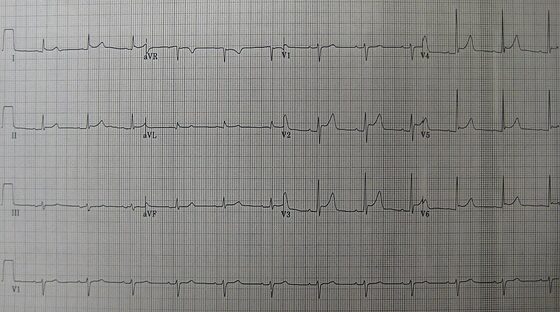
Acute pericarditis — widespread saddle-shaped ST elevation with PR depression (ECG)
James Heilman, MD / CC BY-SA 3.0 — Wikimedia Commons
Investigations
ECG (widespread saddle ST elevation, PR depression); troponin (raised suggests myopericarditis); inflammatory markers; echo (effusion); CXR; identify the cause (viral, uraemia [U&Es], autoimmune, TB, post-MI).
Management
NSAID + colchicine; treat the cause; restrict exercise
- 1Diagnose clinically/ECG and assess risk; identify the cause. First-line = an NSAID plus colchicine, with exercise restriction.Gate: Signs of tamponade or a large effusion → urgent echo and pericardiocentesis — don't just treat the inflammation.
- 2High-risk features (fever, large effusion, immunosuppression, anticoagulation, failure to respond) → admit and investigate the cause; reserve corticosteroids for specific causes or treatment failure (they raise recurrence).
Key points
Sharp pleuritic chest pain relieved by sitting forward + friction rub + WIDESPREAD saddle ST elevation with PR depression = pericarditis → NSAID + colchicine. Watch for tamponade (raised JVP, hypotension, muffled sounds, pulsus paradoxus). Post-MI weeks later = Dressler's.
Monitor & prognosis
Symptom resolution, inflammatory markers, repeat echo for effusion.
Most viral/idiopathic cases resolve; recurrence reduced by colchicine.
Source: ESC pericardial disease guideline; cross-ref acute_care