Bradyarrhythmias & AV block
Sinus node dysfunction or AV conduction block → slow ventricular rate
Overview
Pathologically slow rhythms from sinus node disease or atrioventricular conduction block. First-degree (long PR), Mobitz I (Wenckebach — progressive PR lengthening then dropped beat), Mobitz II (intermittent dropped QRS, high block risk) and third-degree (complete AV dissociation). Mobitz II and complete block are dangerous and usually need pacing.
Recognise
- Fatigue, dizziness, syncope (Stokes-Adams attacks), breathlessness; bradycardia on examination
- 1st degree: PR >200 ms, every P conducts. Mobitz I: progressive PR prolongation then a dropped beat. Mobitz II: constant PR with sudden dropped QRS
- Complete (3rd-degree) block: P waves and QRS independent (AV dissociation), slow escape rhythm
Red flags
- Adverse features (shock, syncope, myocardial ischaemia, heart failure) or risk of asystole (Mobitz II, complete block, recent asystole, ventricular pause >3 s) → urgent treatment/pacing
- Complete heart block after anterior MI → temporary then permanent pacing
Differentials & how to tell them apart
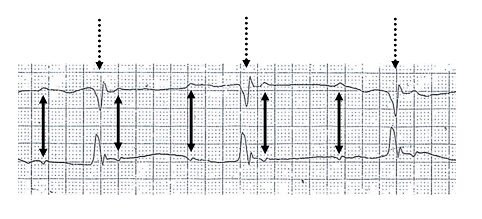
Complete (third-degree) AV block — P waves and QRS dissociated (ECG)
Gregory Marcus, MD / CC BY 3.0 — Wikimedia Commons
Investigations
12-lead ECG and rhythm strip (classify the block); ambulatory monitoring for intermittent symptoms; electrolytes, TFTs, digoxin level, troponin if ischaemic; review rate-limiting drugs.
Management
Atropine for symptomatic bradycardia → pacing (temporary then permanent) for high-risk block
- 1Identify adverse features/asystole risk and reversible causes (drugs, ischaemia, electrolytes, hypothyroidism). Symptomatic → atropine 500 mcg IV, repeated up to 3 mg.Gate: If no response, or there is Mobitz II/complete block/recent asystole/pause >3 s → transcutaneous pacing or isoprenaline/adrenaline as a bridge to transvenous pacing — atropine alone is insufficient.
- 2Definitive treatment of irreversible Mobitz II, complete heart block or symptomatic sinus node disease = permanent pacemaker.
Key points
Mobitz I (Wenckebach) with progressive PR lengthening is usually benign; Mobitz II and complete heart block (AV dissociation, slow escape) are high-risk → atropine first, but they need pacing. Always check rate-limiting drugs and electrolytes.
Monitor & prognosis
Telemetry, pacing thresholds, device checks; resolve reversible causes.
Excellent once paced; complete block carries syncope/sudden-death risk untreated.
Source: Resuscitation Council UK bradycardia algorithm; NICE