Varicose veins & chronic venous insufficiency
Venous valve incompetence → venous hypertension in the lower limb
Overview
Incompetent venous valves cause reflux and venous hypertension, producing dilated tortuous superficial veins (varicose veins) and, over time, the skin changes of chronic venous insufficiency that culminate in venous (gravitational) ulceration. Compression is the mainstay; endovenous/surgical treatment is for symptomatic or complicated disease.
Recognise
- Visible dilated tortuous superficial leg veins; aching, heaviness, itching, swelling, worse on standing/end of day
- Chronic venous insufficiency: haemosiderin pigmentation, venous eczema, lipodermatosclerosis ('inverted champagne bottle' leg), atrophie blanche, oedema
- Venous ulcer: shallow, exudative, irregular, over the medial malleolus (gaiter area), relatively painless
Red flags
- Bleeding varicosity → elevate and apply direct pressure (can be torrential)
- Active or healed venous ulcer, thrombophlebitis, or skin changes → refer to vascular services
Differentials & how to tell them apart
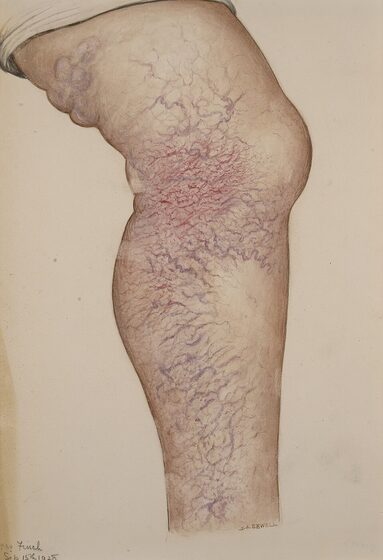
Varicose veins with chronic venous skin changes of the lower leg
S A Sewell, Wellcome Collection / CC BY 4.0 — Wikimedia Commons
Investigations
Clinical diagnosis; venous duplex ultrasound to map reflux and exclude deep venous obstruction before intervention; ABPI BEFORE compression (to exclude significant arterial disease — compression can cause harm if ABPI low).
Management
Compression (after checking ABPI) + leg care; endovenous ablation/sclerotherapy for symptomatic veins
- 1Confirm clinically and map with venous duplex; check ABPI before any compression. Conservative care = compression hosiery, elevation, weight loss and exercise.Gate: Check ABPI before applying compression — significant arterial disease (low ABPI) makes compression harmful; a bleeding varicosity → elevate and apply direct pressure.
- 2Symptomatic, bleeding, ulcerating or skin-changing disease → refer for endovenous ablation/foam sclerotherapy (or surgery); venous ulcers heal with compression bandaging and wound care.
Key points
Dilated tortuous leg veins with aching, haemosiderin staining and a shallow ulcer over the medial malleolus = varicose veins / chronic venous insufficiency → compression is the mainstay, but ALWAYS check ABPI first (compression harms an ischaemic leg). Endovenous ablation for symptomatic veins.
Monitor & prognosis
Skin changes, ulcer healing, symptom relief; recurrence after intervention.
Chronic; compression controls symptoms and heals most venous ulcers; recurrence is common.
Source: NICE CG168 (varicose veins)