Cholesteatoma
Keratinising squamous epithelium trapped in the middle ear/attic
Overview
An abnormal collection of keratinising squamous epithelium in the middle ear/mastoid that erodes bone and is locally destructive. The classic picture is a chronic, FOUL-smelling ear discharge with hearing loss and an attic/marginal retraction filled with white squamous debris. It is not a cancer but behaves aggressively — it needs surgery.
Recognise
- Chronic, persistent, FOUL-smelling (offensive) ear discharge not responding to topical treatment
- Progressive conductive hearing loss; a retraction pocket or crust/squamous debris in the attic (pars flaccida) or a marginal perforation
- Complications from bony erosion: facial nerve palsy, vertigo (labyrinthine fistula), intracranial spread (meningitis, abscess)
Red flags
- Facial nerve palsy, vertigo, severe headache or meningism = intracranial/labyrinthine complication → urgent ENT/neurosurgery
Differentials & how to tell them apart
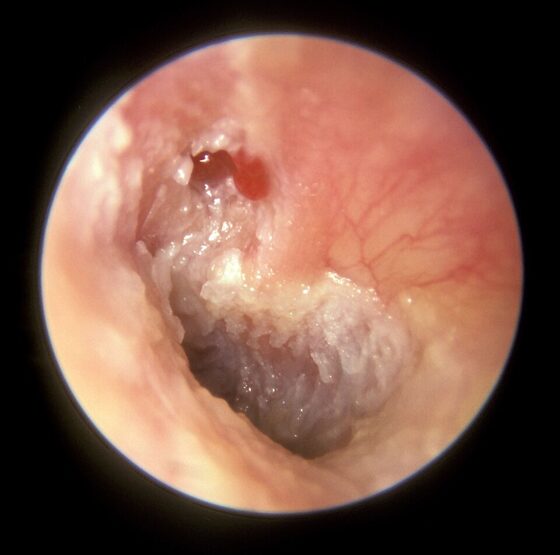
Attic cholesteatoma — squamous debris
Michael Hawke MD / CC BY 4.0 — Wikimedia Commons
Investigations
Otoscopy (attic crust/retraction with squamous debris); audiometry (conductive loss); CT temporal bones to map disease and bony erosion. ENT referral.
Management
ENT referral for surgical removal (mastoidectomy); topical antibiotics only temporise
- 1Refer to ENT. Topical antibiotics and aural toilet can temporise the discharge, but the definitive treatment is SURGICAL removal (mastoidectomy ± tympanoplasty).Gate: A chronic, FOUL-smelling discharge with an attic retraction/squamous debris is cholesteatoma, not simple otitis — it erodes bone and must be EXCISED surgically; topical drops alone never cure it, and delay risks facial palsy/intracranial spread
- 2CT to plan surgery; manage complications (facial palsy, labyrinthine fistula, intracranial sepsis) urgently; long-term follow-up for recurrence.
Key points
Offensive discharge + attic squamous debris + conductive loss = cholesteatoma → surgery. It is locally destructive (bone-eroding), so the complications (facial palsy, intracranial) define its danger.
Monitor & prognosis
Post-operative recurrence (often imaged/second-look); hearing.
Good with complete surgical removal; recurrence possible.
Source: NICE CKS; ENT UK