Nasal polyps
Chronic inflammatory oedematous outgrowths of nasal/sinus mucosa
Overview
Benign, oedematous, pale outgrowths of inflamed nasal/sinus mucosa, part of chronic rhinosinusitis. Bilateral nasal obstruction, reduced smell and rhinorrhoea in adults. UNILATERAL polyps are a red flag; polyps IN A CHILD warrant a cystic fibrosis check.
Recognise
- Bilateral nasal obstruction, reduced/absent sense of smell (hyposmia/anosmia), rhinorrhoea, postnasal drip
- Pale/grey, insensate, mobile, glistening masses in the nasal cavity (an insensate polyp does not hurt when touched)
- Associations: asthma, aspirin sensitivity (Samter triad = asthma + aspirin sensitivity + nasal polyps), chronic rhinosinusitis
Red flags
- UNILATERAL polyp, bleeding, or atypical appearance → exclude malignancy/inverted papilloma (ENT, biopsy/imaging); polyps in a CHILD → test for cystic fibrosis
Differentials & how to tell them apart
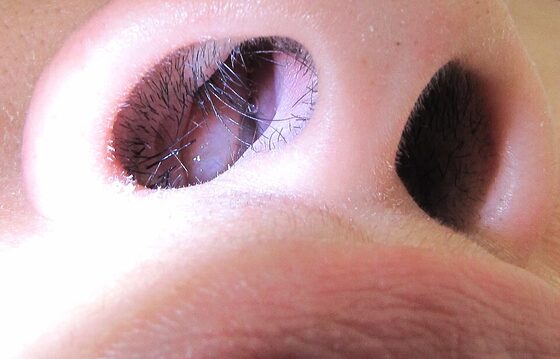
Nasal polyp — pale, in the nasal cavity
MathieuMD / CC BY-SA 3.0 — Wikimedia Commons
Investigations
Anterior rhinoscopy/nasal endoscopy. Unilateral/atypical → ENT + imaging (CT) ± biopsy. Child with polyps → sweat test/CF screen.
Management
Intranasal corticosteroid (± a short oral steroid course); ENT/FESS if refractory
- 1Intranasal corticosteroids first-line; a short course of oral corticosteroid can rapidly shrink large polyps.Gate: UNILATERAL nasal polyps are a red flag for malignancy/inverted papilloma → refer to ENT for endoscopy ± biopsy rather than just treating; and nasal polyps in a CHILD warrant a cystic-fibrosis test
- 2Refractory or large polyps → functional endoscopic sinus surgery; ongoing topical steroids to prevent recurrence; manage associated asthma/aspirin sensitivity.
Key points
Bilateral, pale, insensate = benign polyps → topical steroid. Unilateral = think tumour. Child = think CF. Aspirin-sensitive asthmatics get them (Samter triad).
Monitor & prognosis
Symptom/smell response; recurrence after surgery.
Respond to steroids but commonly recur.
Source: NICE CKS; ENT UK