Acute pancreatitis
Acute pancreatic inflammation (Gallstones, Ethanol the top two — 'I GET SMASHED')
Overview
Acute inflammation of the pancreas from premature enzyme activation/autodigestion. The two commonest causes are GALLSTONES and ETHANOL (the 'I GET SMASHED' mnemonic — also trauma, steroids, mumps, autoimmune, scorpion, hyperlipidaemia/hypercalcaemia, ERCP, drugs). Severe epigastric pain radiating to the back with vomiting and a raised amylase/lipase. Severity is scored (Glasgow/APACHE); management is supportive (aggressive fluids, analgesia, treat the cause). Complications: necrosis, pseudocyst, organ failure.
Recognise
- Severe constant EPIGASTRIC pain radiating to the BACK, relieved by sitting forward, with nausea/vomiting
- Raised serum AMYLASE (>3× upper limit) or LIPASE (more specific); epigastric tenderness; in severe disease — Cullen (periumbilical) / Grey-Turner (flank) bruising, shock, organ failure
- Causes: Gallstones + Ethanol (commonest); also hypertriglyceridaemia, hypercalcaemia, ERCP, drugs, autoimmune, trauma, mumps
Red flags
- Severe pancreatitis (Glasgow ≥3 / persistent organ failure) → HDU/ITU, high mortality
- Necrotising pancreatitis/infected necrosis, pseudocyst, ARDS, AKI, hypocalcaemia
Differentials & how to tell them apart
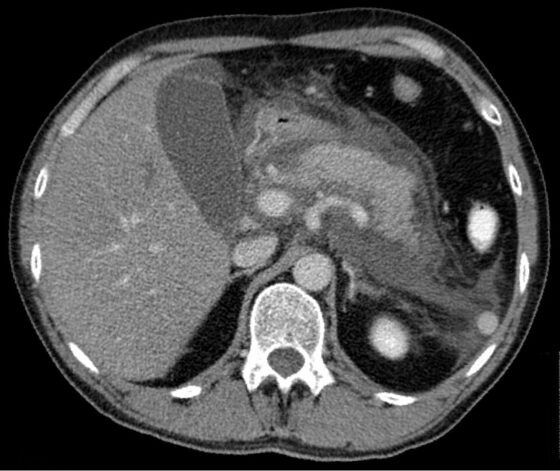
Acute pancreatitis — oedematous pancreas with peripancreatic fluid/inflammation (CT)
Hellerhoff / CC BY-SA 3.0 — Wikimedia Commons
Investigations
Serum AMYLASE/LIPASE (raised; lipase more specific); the Glasgow (modified) score at 48 h (PaO2, Age, WCC, Calcium, Urea, LDH, Albumin, Sugar) ± CRP. USS (gallstones — the treatable cause); LFTs; calcium/triglycerides; CT (after 48–72 h) for necrosis/complications.
Management
Aggressive IV fluids + analgesia + treat the cause; HDU/ITU if severe
- 1Diagnose on amylase/lipase + clinical picture. Aggressive IV fluid resuscitation, analgesia, antiemetics, early enteral nutrition. Score severity (Glasgow at 48 h) and identify the cause (USS for gallstones, lipids, calcium).Gate: Do NOT give prophylactic antibiotics routinely (only for confirmed infected necrosis); gallstone pancreatitis with cholangitis/obstruction needs urgent ERCP; severe disease (Glasgow ≥3) needs HDU/ITU
- 2Treat the cause (cholecystectomy for gallstone pancreatitis — same admission/within 2 weeks; abstinence; lipid/calcium control); manage complications (necrosis → step-up drainage/necrosectomy, pseudocyst, organ support).
Key points
Epigastric pain to the back + raised amylase/lipase = acute pancreatitis; gallstones + ethanol are the top causes (I GET SMASHED). Aggressive fluids; score severity (Glasgow); NO routine antibiotics; treat the cause (ERCP/cholecystectomy for gallstones).
Monitor & prognosis
Severity score, fluids/urine output, calcium, CT for complications.
Mild self-limiting; severe/necrotising high-mortality.
Source: BSG; IAP/APA; NICE NG104