Ankylosing spondylitis
HLA-B27-associated axial seronegative spondyloarthropathy (sacroiliitis → spinal fusion)
Overview
A chronic seronegative spondyloarthropathy causing inflammatory axial pain and progressive fusion of the spine and sacroiliac joints. Typically a young man with inflammatory back pain (worse with rest, better with exercise, prolonged morning stiffness) and HLA-B27 positivity. The extra-articular 'A's (anterior uveitis, aortic regurgitation, apical lung fibrosis) are high-yield.
Recognise
- Young man with insidious inflammatory back pain/buttock pain >3 months: worse with rest and at night, BETTER with exercise, morning stiffness >30 min
- Reduced lumbar flexion (Schober test), reduced chest expansion, 'question-mark' posture; enthesitis (Achilles/plantar), dactylitis
- Extra-articular 'A's: Anterior uveitis (commonest), Aortic regurgitation, Apical lung fibrosis, AV block, Amyloidosis, IBD association
Red flags
- Acute anterior uveitis (painful red eye, photophobia) → same-day ophthalmology
- Spinal fracture risk in a fused, osteoporotic 'bamboo' spine after minor trauma → low threshold for imaging
Differentials & how to tell them apart
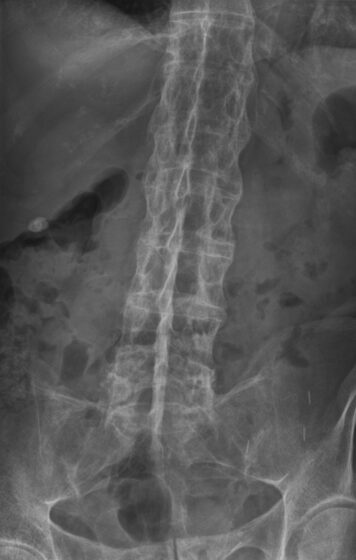
'Bamboo spine' — syndesmophytes fusing the spine in ankylosing spondylitis (X-ray)
Stevenfruitsmaak / CC BY-SA 3.0 — Wikimedia Commons
Investigations
X-ray of sacroiliac joints (sacroiliitis — erosions, sclerosis, fusion; 'bamboo spine' and syndesmophytes late); MRI SI joints for early disease (bone-marrow oedema); HLA-B27; raised ESR/CRP; reduced chest expansion / Schober test.
Management
Exercise/physiotherapy + NSAIDs first-line; anti-TNF/IL-17 if inadequate
- 1Confirm with SI-joint imaging (X-ray; MRI for early sacroiliitis) and HLA-B27. First-line = a structured exercise/physiotherapy programme plus NSAIDs.Gate: Axial disease does NOT respond to conventional DMARDs (methotrexate/sulfasalazine) — those are only for peripheral joints; escalate axial disease to a biologic.
- 2Persistent active disease despite NSAIDs → anti-TNF or IL-17 inhibitor. Manage extra-articular disease (uveitis, AR); maintain bone health and posture.
Key points
Young man + inflammatory back pain (better with exercise, worse with rest) + HLA-B27 + sacroiliitis = ankylosing spondylitis → exercise + NSAIDs, biologic if refractory. Remember the 'A's (anterior uveitis, AR, apical fibrosis). DMARDs don't help the spine.
Monitor & prognosis
BASDAI disease activity, spinal mobility, screen for uveitis/AR; bone density.
Variable; early treatment and exercise preserve function; advanced disease fuses the spine.
Source: NICE NG65 (spondyloarthritis)