Gout
Monosodium urate crystal deposition (hyperuricaemia) → acute and chronic arthritis
Overview
Deposition of monosodium urate crystals from sustained hyperuricaemia, causing acute attacks of agonising monoarthritis (classically the first MTP joint — podagra), tophi and chronic arthropathy. Aspiration shows negatively birefringent needle-shaped crystals. Acute attacks are treated with anti-inflammatories; urate-lowering therapy prevents recurrence.
Recognise
- Acute: rapid-onset severe pain, swelling, redness and warmth of a single joint (first MTP — podagra; also midfoot, ankle, knee), often overnight
- Triggers: alcohol, purine-rich food, dehydration, diuretics, surgery, renal impairment; tophi (ear, fingers, olecranon) in chronic disease
- Aspirate: negatively birefringent, needle-shaped monosodium urate crystals (yellow when parallel to the compensator)
Red flags
- A hot joint could be SEPTIC arthritis — aspirate to confirm crystals and exclude infection
- Tophaceous/erosive chronic gout → joint damage; urate nephropathy/stones
Differentials & how to tell them apart
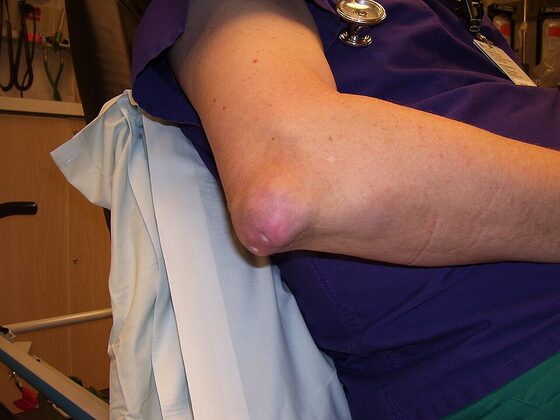
Gouty tophus over the elbow (olecranon)
NickGorton / CC BY 2.5 — Wikimedia Commons
Investigations
Joint aspiration and polarised microscopy (negatively birefringent needle-shaped urate crystals; also exclude sepsis); serum urate (may be normal in an acute attack — recheck weeks later); U&Es (renal); X-ray (punched-out erosions with sclerotic margins/overhanging edges in chronic disease).
Management
Acute: NSAID/colchicine/steroid; then allopurinol (urate-lowering) with flare cover
- 1Aspirate to confirm urate crystals and exclude sepsis. Treat the acute attack with an NSAID (+PPI), colchicine, or a corticosteroid.Gate: If the patient is ALREADY on allopurinol, CONTINUE it through the acute attack — don't stop it; never start urate-lowering therapy mid-attack (start ~2–4 weeks after it settles).
- 2Offer urate-lowering therapy (allopurinol first-line, titrated to a target urate) after a first attack, with colchicine/NSAID cover during initiation; address alcohol, diet, weight and diuretics.Gate: Allopurinol interacts with azathioprine/6-mercaptopurine (xanthine-oxidase inhibition → toxic accumulation) — a dangerous combination.
Key points
Sudden agonising first-MTP arthritis (podagra) + negatively birefringent needle crystals = gout. Treat the attack (NSAID/colchicine/steroid); allopurinol to target urate — start after the attack, with flare cover, and CONTINUE it if already on it. Avoid allopurinol + azathioprine.
Monitor & prognosis
Serum urate to target (<360, or <300 if tophi); renal function; attack frequency.
Highly treatable; urate-lowering to target prevents recurrence and joint damage.
Source: NICE NG219 (gout)