Allergic conjunctivitis
Type I hypersensitivity of the conjunctiva (seasonal/perennial; vernal/atopic in severe forms)
Overview
IgE-mediated conjunctival hypersensitivity. Bilateral itch (the cardinal symptom) with watering, chemosis and stringy mucus, on an atopic background. Treated with allergen avoidance, antihistamine/mast-cell-stabiliser drops. Vernal and atopic keratoconjunctivitis are severe, sight-threatening variants.
Recognise
- Bilateral ITCHING (the hallmark), watering, redness and lid swelling
- Chemosis (conjunctival oedema) and stringy/ropy mucoid discharge; cobblestone tarsal papillae in chronic/vernal disease
- Personal/family atopy (hay fever, asthma, eczema); seasonal or perennial pattern
Red flags
- Vernal/atopic keratoconjunctivitis with shield ulcer, photophobia and reduced vision → ophthalmology (sight-threatening)
Differentials & how to tell them apart
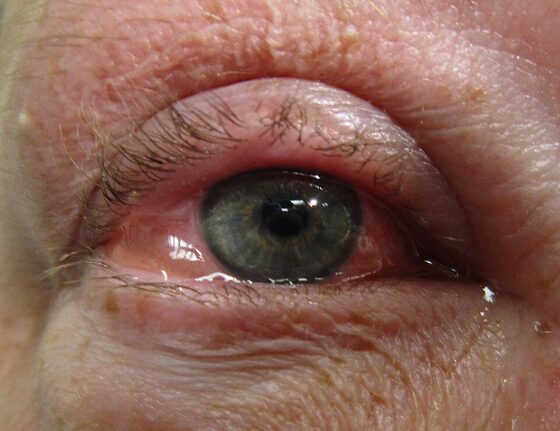
Allergic conjunctivitis — chemosis and conjunctival injection
James Heilman, MD / CC BY-SA 4.0 — Wikimedia Commons
Investigations
Clinical. No routine tests.
Management
Allergen avoidance + topical antihistamine / mast-cell stabiliser
- 1Avoid allergens, cool compresses, lubricants and avoid eye-rubbing. Add a topical antihistamine or dual-action mast-cell stabiliser; mast-cell stabilisers need ~2 weeks to work so are for recurrent/persistent disease.Gate: Severe vernal/atopic disease with corneal (shield) ulcer or visual loss → refer; reserve topical steroids for specialist supervision (glaucoma/cataract/HSV risk)
- 2Inadequate control → add oral antihistamine, topical NSAID, or specialist-supervised topical steroid; refer vernal/atopic keratoconjunctivitis.
Key points
Itch = allergy until proven otherwise. Stringy mucus and chemosis with bilateral symptoms and atopy clinch it.
Monitor & prognosis
Symptom control through the season.
Good; vernal disease often improves after puberty.
Source: NICE CKS Conjunctivitis – allergic