Bacterial conjunctivitis
Acute bacterial infection of the conjunctiva (Staph aureus, Strep pneumoniae, H. influenzae; Neisseria/Chlamydia in specific settings)
Overview
Acute infective conjunctivitis with purulent discharge, usually self-limiting (5–7 days). Most need no antibiotic; topical chloramphenicol if severe or rapid resolution required. Hyperacute purulent conjunctivitis in a sexually active adult/neonate raises gonococcal/chlamydial causes (ophthalmia neonatorum).
Recognise
- Acute red eye with PURULENT (yellow-green) discharge; lids stuck together on waking
- Often starts unilateral then spreads to the other eye; gritty discomfort, NOT true pain
- Normal vision and pupils; no photophobia (if present, suspect keratitis/uveitis)
Red flags
- Hyperacute copious purulent discharge with rapid corneal involvement → gonococcal — emergency (corneal perforation risk)
- Neonate (ophthalmia neonatorum) → urgent: gonococcus (day 1–5) or chlamydia (day 5–14)
- Contact-lens wearer with a red painful eye → exclude microbial keratitis (refer)
Differentials & how to tell them apart
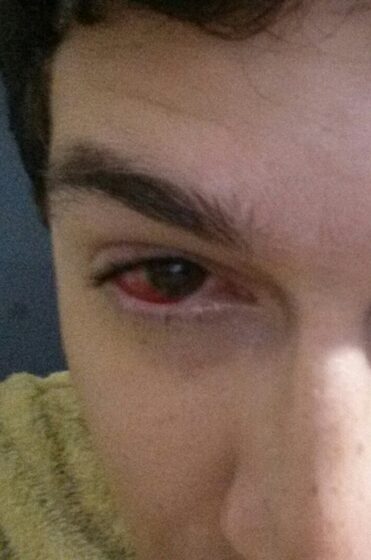
Bacterial conjunctivitis — purulent discharge, injected conjunctiva
Adriano / CC BY-SA 4.0 — Wikimedia Commons
Investigations
Clinical. Swab (bacterial culture ± viral PCR/chlamydia) if severe, recurrent, neonatal, or treatment-resistant.
Management
Self-care + hygiene; topical chloramphenicol only if severe or rapid resolution needed
- 1Reassure (self-limiting, 5–7 days). Lid hygiene and avoid sharing towels. Delayed-antibiotic strategy: chloramphenicol if not settling in 3 days, or immediately if severe.Gate: Do NOT treat as simple conjunctivitis if there is true PAIN, PHOTOPHOBIA, reduced VISION, or it is a CONTACT-LENS wearer — these need referral (keratitis/uveitis); hyperacute purulent discharge = gonococcal emergency; neonatal conjunctivitis is urgent
- 2Persistent >7–10 days → swab and ophthalmology referral. Gonococcal → IM ceftriaxone + ophthalmology. Chlamydial → oral azithromycin/doxycycline + partner treatment.
Key points
Discharge type sorts it: purulent=bacterial, watery=viral, stringy+itch=allergic. Pain/photophobia/visual loss means it is NOT conjunctivitis.
Monitor & prognosis
Resolution by 7 days; review if not.
Excellent; self-limiting in immunocompetent adults.
Source: NICE CKS Conjunctivitis – infective