Blepharitis
Chronic lid-margin inflammation (anterior: staph/seborrhoeic; posterior: meibomian gland dysfunction)
Overview
Chronic inflammation of the eyelid margins. Anterior blepharitis affects the lash bases (staphylococcal or seborrhoeic); posterior blepharitis is meibomian gland dysfunction (MGD), strongly linked to rosacea and seborrhoeic dermatitis. Bilateral, relapsing-remitting gritty sore eyes — a clinical diagnosis managed conservatively, NOT with antibiotics first-line.
Recognise
- Bilateral burning, grittiness, itching and crusting of the lid margins, worse on waking
- Anterior: scales/collarettes at the lash bases, lashes may be lost or misdirected (trichiasis)
- Posterior (MGD): capped/inspissated meibomian orifices, frothy tear film, oily tear instability
- Associations: rosacea, seborrhoeic dermatitis, dry eye, recurrent chalazia/styes
Red flags
- Pain, photophobia or blurred/reduced vision → corneal involvement (marginal keratitis) — same-day ophthalmology
- Unilateral, ulcerated or non-resolving lid lesion with lash loss → consider eyelid malignancy (BCC/sebaceous) — 2-week-wait
Differentials & how to tell them apart
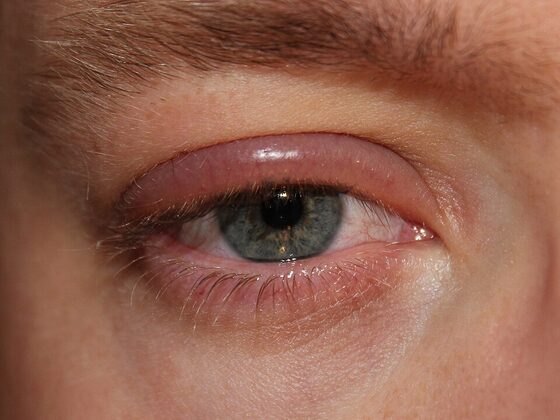
Blepharitis — crusting and inflammation of the lid margins
clubtable / Public domain — Wikimedia Commons
Investigations
Clinical (lid-margin examination at the slit lamp). No routine investigation. Swab only if severe/atypical or unresponsive.
Management
Lid hygiene — warm compresses + lid-margin cleaning (and eyelid massage for posterior/MGD)
- 1Lid hygiene twice daily (warm compress 5–10 min, then lid-margin cleaning; add eyelid massage to express meibomian glands in posterior disease). Explain it is chronic and needs ongoing maintenance even when settled. Treat associated dry eye, seborrhoeic dermatitis or rosacea.Gate: Arrange EMERGENCY admission if periorbital/orbital cellulitis; same-day ophthalmology if pain, photophobia, red eye or visual loss (corneal disease) — do NOT just treat as lid disease
- 2Anterior, lid hygiene ineffective → topical chloramphenicol rubbed into the lid margin. Posterior with rosacea/MGD → oral doxycycline (off-label) or tetracycline (avoid in pregnancy/under-12s → erythromycin). Refer if diagnosis uncertain or vision deteriorating.
Key points
It is chronic and relapsing — the teaching point is maintenance lid hygiene, not a course of antibiotics. A recurrent unilateral 'chalazion' with lash loss is sebaceous carcinoma until proven otherwise.
Monitor & prognosis
Review symptom control; reinforce that stopping lid hygiene causes relapse.
Good symptom control with adherence; not curable but controllable.
Source: NICE CKS Blepharitis (College of Optometrists CMG; BOPSS)