Episcleritis
Benign inflammation of the episclera (usually idiopathic, self-limiting)
Overview
Benign, self-limiting inflammation of the episclera. A localised red eye with mild or no pain and normal vision; the redness blanches with topical phenylephrine (superficial vessels). Reassurance ± lubricants/NSAID; the key skill is distinguishing it from sight-threatening scleritis.
Recognise
- Sectoral or diffuse redness with mild discomfort/grittiness, NOT severe pain
- Normal vision; no photophobia or discharge; superficial vessels BLANCH with phenylephrine
- Mostly idiopathic; a minority have associated systemic inflammatory disease
Red flags
- Severe boring pain, visual loss, or non-blanching deep redness → reconsider scleritis
Differentials & how to tell them apart
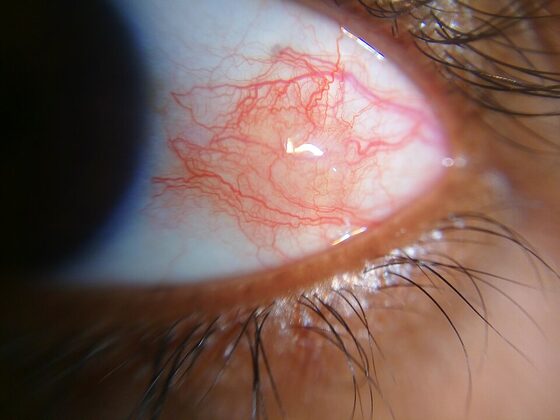
Episcleritis — sectoral superficial injection
Imrankabirhossain / CC BY-SA 4.0 — Wikimedia Commons
Investigations
Clinical ± phenylephrine blanch test. No routine systemic work-up unless recurrent.
Management
Reassurance + lubricants (NSAID if symptomatic) — self-limiting
- 1Reassure (self-limiting, not harmful). Cold compresses/artificial tears. Topical/oral NSAID or, if more severe, a short course of topical steroid.Gate: Confirm it is episcleritis (mild pain, blanches with phenylephrine) and not scleritis (severe pain, non-blanching) before reassuring — recurrent disease may need a systemic screen
- 2Recurrent/persistent → ophthalmology and consider a systemic association.
Key points
Comfortable, blanching, vision normal = episcleritis (benign). It is the benign mimic of scleritis — phenylephrine sorts them.
Monitor & prognosis
Self-resolves over 1–2 weeks.
Excellent.
Source: NICE CKS Red eye; College of Optometrists CMG