Microbial keratitis (bacterial)
Infective corneal ulcer (Staph, Strep, Pseudomonas — contact-lens-related)
Overview
A sight-threatening infection of the corneal stroma (corneal ulcer). Strongly associated with contact-lens wear (especially overnight); Pseudomonas causes rapid, aggressive ulcers. Presents as a painful red eye with a white corneal infiltrate ± hypopyon. An ophthalmic emergency — scrape, intensive topical antibiotics, NO steroids/lenses.
Recognise
- Painful red eye, photophobia, watering, reduced vision and discharge
- White/grey corneal infiltrate or ulcer with an overlying epithelial defect (stains with fluorescein) ± HYPOPYON
- Contact-lens wear (especially extended-wear/poor hygiene), trauma, or ocular surface disease
Red flags
- Any contact-lens wearer with a red painful eye → assume microbial keratitis until excluded — same-day referral
- Hypopyon, enlarging infiltrate, or central ulcer → urgent ophthalmology (perforation/scarring risk)
Differentials & how to tell them apart
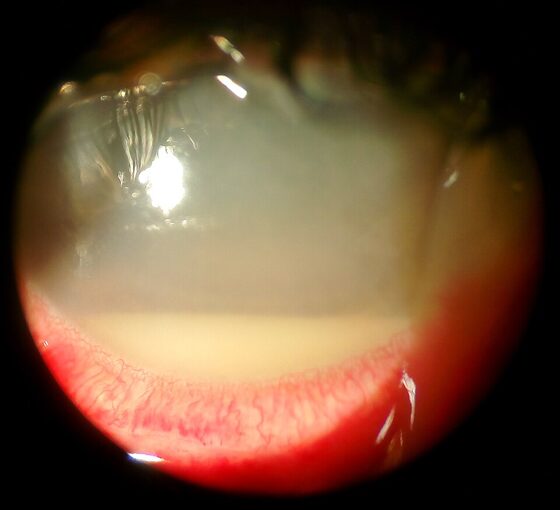
Microbial keratitis — corneal infiltrate with a hypopyon
Imrankabirhossain / CC BY-SA 4.0 — Wikimedia Commons
Investigations
Slit-lamp exam; corneal SCRAPE for Gram stain, culture and sensitivities BEFORE starting antibiotics where possible.
Management
Urgent referral + intensive topical fluoroquinolone after corneal scrape
- 1Same-day ophthalmology. Corneal scrape for microscopy/culture, then intensive topical broad-spectrum antibiotic (hourly fluoroquinolone, or fortified antibiotics for severe/central ulcers). Stop lens wear.Gate: Do NOT prescribe topical steroids or start antibiotics in primary care that could compromise the corneal scrape — refer; treat any contact-lens-related red painful eye as keratitis
- 2Adjust to culture results; cycloplegia for comfort; consider admission for hourly drops. Corneal perforation → glue/graft.
Key points
Contact lenses + painful red eye + white corneal spot = microbial keratitis until proven otherwise. Hypopyon means a severe anterior-chamber reaction. Steroids and lenses are out.
Monitor & prognosis
Daily review until improving; watch for thinning/perforation.
Good if treated early; central scarring can permanently reduce vision.
Source: College of Optometrists CMG; RCOphth