Pterygium
Fibrovascular conjunctival overgrowth onto the cornea (UV/chronic surface exposure)
Overview
A wing-shaped fibrovascular growth of conjunctiva extending onto the nasal cornea, driven by chronic UV/wind/dust exposure ('surfer's/farmer's eye'). Usually cosmetic/irritative; surgery if it threatens the visual axis or causes astigmatism.
Recognise
- Triangular fleshy conjunctival growth crossing the limbus onto the cornea, usually nasal
- Irritation, redness, foreign-body sensation; astigmatism or visual-axis encroachment if advanced
- Sunny/outdoor exposure history
Red flags
- Atypical, rapidly growing or pigmented lesion → consider ocular surface squamous neoplasia/melanoma (refer)
Differentials & how to tell them apart
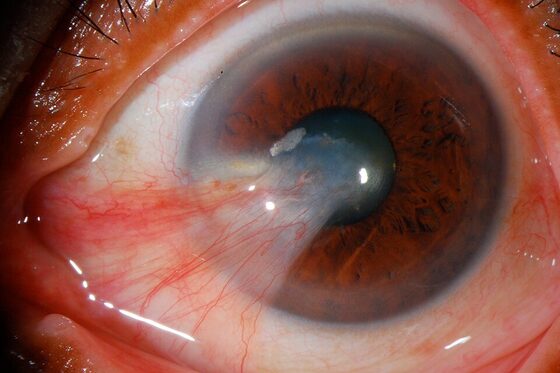
Pterygium — fibrovascular growth extending onto the cornea
Jmvaras José Miguel Varas, MD / CC BY 3.0 — Wikimedia Commons
Investigations
Clinical; document encroachment onto the cornea and refraction if visual symptoms.
Management
Lubricants + UV protection; surgical excision if it threatens vision
- 1Lubricants for irritation; sunglasses/UV protection to slow growth.Gate: Refer for excision if it encroaches on the visual axis, induces significant astigmatism, or looks atypical (neoplasia)
- 2Surgical excision with conjunctival autograft (recurrence is common).
Key points
Crosses onto the cornea = pterygium; stops at the limbus = pinguecula. UV exposure is the link.
Monitor & prognosis
Growth toward the visual axis.
Benign; can recur after surgery.
Source: College of Optometrists CMG