Scleritis
Inflammation of the sclera (often associated with systemic vasculitis/RA)
Overview
A painful, potentially sight-threatening inflammation of the sclera, frequently associated with systemic disease (rheumatoid arthritis, granulomatosis with polyangiitis, other vasculitides). Severe boring pain that wakes the patient, deep violaceous injection that does NOT blanch with topical phenylephrine. Needs systemic anti-inflammatory treatment.
Recognise
- Severe, deep, boring ocular pain radiating to the brow/jaw that wakes the patient at night; tender globe
- Deep violaceous/bluish scleral injection that does NOT blanch with phenylephrine (vessels are deep)
- Necrotising scleritis (scleromalacia perforans, often RA) can perforate; ~50% have an underlying systemic disease
Red flags
- Necrotising/posterior scleritis or visual loss → urgent ophthalmology + systemic immunosuppression
- Scleritis + systemic features → investigate for vasculitis (GPA/RA)
Differentials & how to tell them apart
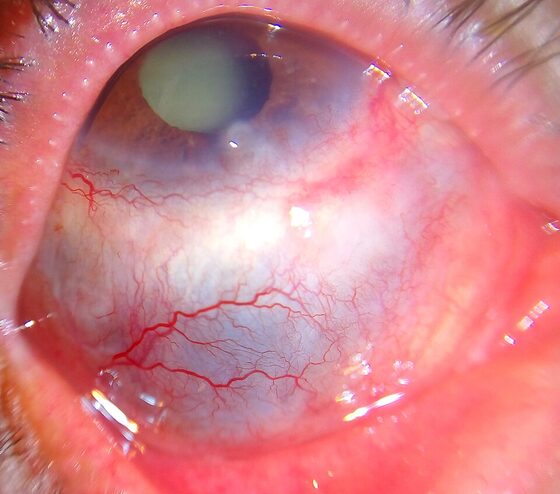
Scleritis — deep, violaceous scleral injection
Imrankabirhossain / CC BY-SA 4.0 — Wikimedia Commons
Investigations
Slit-lamp ± phenylephrine test (deep vessels do not blanch). Systemic work-up: RF/anti-CCP, ANCA, ANA, urinalysis; B-scan for posterior scleritis.
Management
Refer; systemic NSAID → oral steroid/immunosuppression per severity
- 1Urgent (within 24 h) ophthalmology referral. Mild non-necrotising disease: oral NSAID. Investigate for systemic vasculitis.Gate: Distinguish from episcleritis with the phenylephrine blanch test BEFORE labelling it benign — scleritis (deep vessels, severe pain) needs systemic treatment, episcleritis does not
- 2Inadequate response or necrotising/posterior disease → systemic corticosteroids and immunosuppression/biologics, co-managed with rheumatology.
Key points
Severe boring pain that wakes you + non-blanching deep redness = scleritis (look for RA/vasculitis). Mild, blanching, comfortable = episcleritis.
Monitor & prognosis
Inflammation control; monitor the systemic disease.
Necrotising disease threatens the globe and signals serious systemic illness.
Source: College of Optometrists CMG; RCOphth; NICE CKS Red eye