Viral conjunctivitis
Adenoviral conjunctivitis (highly contagious; HSV is a sight-threatening exception)
Overview
Highly contagious adenoviral conjunctivitis, usually following a URTI. Watery discharge, follicular reaction and a tender preauricular node. Self-limiting over 1–2 weeks; no antibiotic. The key exception is herpetic (HSV) infection, which must not be steroided or missed.
Recognise
- Bilateral (often sequential) red eyes with WATERY discharge and a gritty/burning feel
- Tender preauricular lymph node; follicles on the tarsal conjunctiva
- Recent URTI/contact; very contagious (epidemic keratoconjunctivitis can reduce vision via subepithelial infiltrates)
Red flags
- Dendritic ulcer on fluorescein, vesicular lid rash, or marked photophobia/visual loss → HSV — refer same-day, do NOT give topical steroids
- Pseudomembrane or significant corneal infiltrates → ophthalmology
Differentials & how to tell them apart
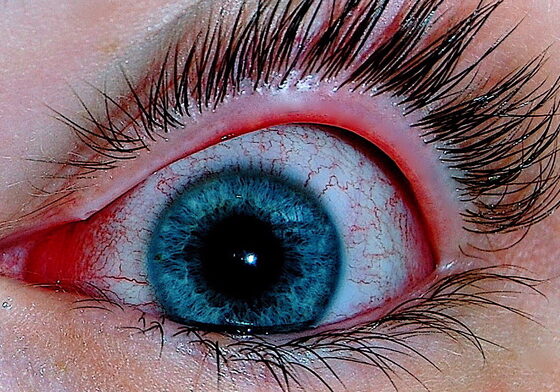
Viral (adenoviral) conjunctivitis — watery red eye
Joyhill09 / CC BY-SA 3.0 — Wikimedia Commons
Investigations
Clinical. Viral PCR swab (adenovirus/HSV) if recurrent or diagnostic doubt. Fluorescein to exclude a dendrite.
Management
Supportive (lubricants, hygiene); avoid antibiotics and avoid steroids
- 1Reassure (self-limiting 1–2 weeks). Strict hygiene — it is very contagious (separate towels, hand-washing, may be infectious up to ~14 days). Cool compresses and lubricants.Gate: If a DENDRITE on fluorescein, vesicles or reduced vision → HSV: refer same-day and do NOT prescribe topical steroids
- 2Persistent >7–10 days, pseudomembrane, or vision-reducing infiltrates → ophthalmology.
Key points
Watery + preauricular node + URTI = adenovirus. Always fluorescein to exclude the herpetic dendrite before anyone reaches for steroids.
Monitor & prognosis
Resolution over 1–2 weeks; safety-net for visual change.
Self-limiting; EKC infiltrates can linger.
Source: NICE CKS Conjunctivitis – infective