Acute epiglottitis
Supraglottic infection (Haemophilus influenzae type b) — airway emergency
Overview
Life-threatening inflammation of the epiglottis and supraglottis, classically Haemophilus influenzae type b (Hib) — now rare in children due to vaccination, so increasingly seen in adults. Rapid airway obstruction: do NOT examine the throat or distress the patient; secure the airway first.
Recognise
- Rapid onset of severe sore throat, high fever, drooling and difficulty/pain swallowing
- Muffled "hot-potato" voice, stridor, and the child sitting still, leaning forward in the TRIPOD position to keep the airway open
- Toxic/unwell appearance; minimal cough (vs croup)
Red flags
- Any stridor, drooling or tripod posture = impending airway obstruction → do NOT lie the patient down, examine the throat, or cannulate while distressed; get senior anaesthetics/ENT to secure the airway
Differentials & how to tell them apart
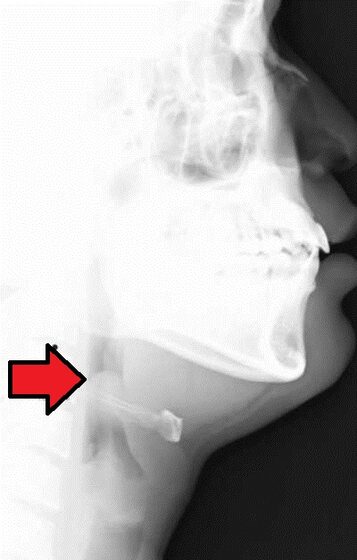
Epiglottitis — lateral neck "thumbprint" sign
Med Chaos / CC0 — Wikimedia Commons
Investigations
Clinical — do NOT delay for investigations or examine the throat (can precipitate complete obstruction). The airway is secured in a controlled setting (theatre); a lateral neck X-ray (if safe/stable) may show the "thumbprint" sign. Blood cultures after the airway is safe.
Management
Secure the airway FIRST (anaesthetics/ENT) → then IV ceftriaxone
- 1Keep the child calm and upright with the parent; do NOT examine the throat, lie them flat, or cannulate while distressed. Summon senior anaesthetics + ENT to secure the airway in a controlled setting (theatre).Gate: The airway comes BEFORE everything — do not perform throat examination, venepuncture, or imaging that distresses the patient until the airway is secured, because these can precipitate complete obstruction
- 2Once the airway is safe → IV ceftriaxone, blood cultures, fluids; rifampicin prophylaxis for close contacts as advised; ensure Hib immunisation.
Key points
Toxic + drooling + tripod + stridor + minimal cough = epiglottitis → airway first, hands off the throat. Croup (barking cough, less toxic) is the gradual mimic.
Monitor & prognosis
Airway, oxygenation, response to antibiotics; contacts.
Good if the airway is secured promptly; obstruction is the killer.
Source: NICE CKS; ENT UK / paediatric emergency guidance