Croup (laryngotracheobronchitis)
Parainfluenza viral infection of the larynx/subglottis
Overview
A common viral (usually parainfluenza) infection of the larynx and subglottis in young children (6 months–3 years), causing a barking cough, hoarse voice and stridor that is worse at night. It is the gradual, less-toxic mimic of epiglottitis — and is treated with a single dose of oral dexamethasone.
Recognise
- Barking ("seal-like") cough, hoarse voice, and inspiratory STRIDOR, worse at night and with agitation, after a coryzal prodrome
- Low-grade fever, child usually not toxic and able to swallow (unlike epiglottitis); symptoms fluctuate
- AP neck X-ray (if done) shows subglottic narrowing — the "steeple sign" (vs the lateral "thumbprint" of epiglottitis)
Red flags
- Severe distress, rising respiratory/heart rate then a falling rate and drowsiness/cyanosis = exhaustion → impending obstruction; stridor at rest = at least moderate croup
Differentials & how to tell them apart
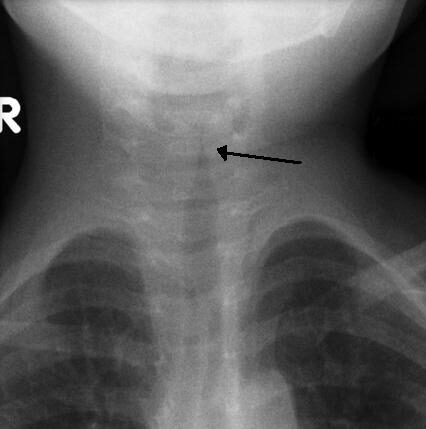
Croup — AP neck X-ray "steeple sign"
Frank Gaillard / CC BY-SA 3.0 — Wikimedia Commons
Investigations
Clinical diagnosis (severity by the degree of stridor/recession/distress); do not distress the child with unnecessary tests. X-ray is not routine (steeple sign if performed).
Management
Single dose of oral dexamethasone (0.15 mg/kg) for all; nebulised adrenaline if severe
- 1Keep the child calm; give a single dose of oral dexamethasone (0.15 mg/kg) for all severities — it reduces symptoms and admissions. Most mild croup can go home with safety-netting.Gate: Distinguish from EPIGLOTTITIS — croup is a barking cough in a non-toxic child who can swallow (treat with dexamethasone); a toxic, drooling, tripod child with minimal cough is epiglottitis → airway-first, hands off the throat
- 2Moderate–severe (stridor at rest, marked recession) → nebulised adrenaline + steroid + oxygen, observe for rebound; impending obstruction/exhaustion → anaesthetics/ICU for airway support.
Key points
Barking cough + stridor + worse at night + not toxic = croup → oral dexamethasone. Steeple sign (AP) vs the epiglottitis thumbprint (lateral). The danger is mistaking it for, or missing, epiglottitis.
Monitor & prognosis
Work of breathing, stridor at rest, response to steroid/adrenaline, for rebound.
Usually self-limiting over a few days; excellent with steroids.
Source: NICE CKS Croup