Haemolytic anaemia
Premature red-cell destruction — inherited (membrane/enzyme/Hb) or acquired (immune/mechanical)
Overview
Anaemia from premature red-cell destruction, with a compensatory reticulocytosis and the biochemical signature of haemolysis (raised LDH and bilirubin, low haptoglobin). Split by site (intra- vs extravascular) and cause: inherited (hereditary spherocytosis, G6PD deficiency, sickle/thalassaemia) vs acquired (autoimmune — warm/cold, mechanical, drug-induced, microangiopathic). The direct antiglobulin test (DAT/Coombs) separates immune from non-immune.
Recognise
- Anaemia + jaundice (unconjugated) + splenomegaly; dark urine; raised reticulocytes
- Haemolysis screen: HIGH LDH, HIGH unconjugated bilirubin, LOW haptoglobin, raised reticulocytes; film — spherocytes, schistocytes, bite cells, or Heinz bodies by cause
- DAT (Coombs) POSITIVE = immune (autoimmune/alloimmune/drug); NEGATIVE = hereditary or mechanical/microangiopathic
Red flags
- Microangiopathic haemolysis with thrombocytopenia (schistocytes) → TTP/HUS/DIC — a haematological emergency (TTP → plasma exchange, do NOT give platelets)
- Severe autoimmune haemolysis → urgent steroids/transfusion (warm AIHA)
Differentials & how to tell them apart
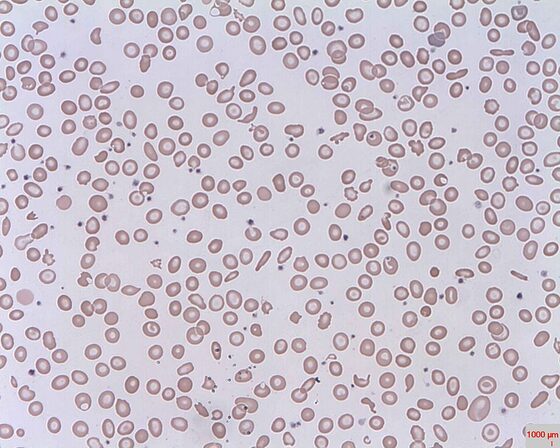
Schistocytes (red-cell fragments) — microangiopathic haemolysis (blood film)
Prof. Osaro Erhabor / CC0 — Wikimedia Commons
Investigations
FBC + reticulocytes (high), blood FILM (spherocytes/schistocytes/bite cells), LDH (high), bilirubin (unconjugated, high), haptoglobin (low); DIRECT ANTIGLOBULIN TEST (Coombs) — immune vs not; G6PD assay, osmotic fragility/EMA (spherocytosis), haemoglobinopathy screen; identify drug/mechanical cause.
Management
Confirm haemolysis (retics/LDH/bilirubin/haptoglobin) + DAT → treat the cause (steroids for warm AIHA)
- 1Confirm haemolysis (reticulocytes up, LDH/bilirubin up, haptoglobin down) and do the DIRECT ANTIGLOBULIN TEST: positive → immune (warm/cold AIHA); negative → hereditary (spherocytosis, G6PD) or mechanical/microangiopathic.Gate: Schistocytes + thrombocytopenia = microangiopathic haemolysis (TTP/HUS/DIC) — a haematological emergency; TTP needs PLASMA EXCHANGE and platelets are CONTRAINDICATED.
- 2Warm AIHA → corticosteroids (± rituximab/splenectomy); G6PD → avoid oxidants; hereditary spherocytosis → folate ± splenectomy (vaccinate + penicillin prophylaxis); treat the underlying trigger.
Key points
Anaemia + jaundice + splenomegaly + reticulocytosis + raised LDH/bilirubin + low haptoglobin = haemolysis. DAT splits it: POSITIVE = immune (warm IgG → steroids; cold IgM → mycoplasma/EBV); NEGATIVE = hereditary (spherocytosis, G6PD bite cells/Heinz bodies) or microangiopathic. Schistocytes + low platelets = TTP/HUS → plasma exchange, NO platelets in TTP.
Monitor & prognosis
Hb/reticulocytes/LDH, DAT, response to steroids; splenectomy prophylaxis.
Depends on the cause; warm AIHA often steroid-responsive; TTP fatal untreated but responds to plasma exchange.
Source: BSH; cross-ref child_health (G6PD/spherocytosis/sickle)