Hyposplenism & asplenia
Absent/reduced splenic function → susceptibility to encapsulated bacteria (overwhelming sepsis)
Overview
Reduced or absent splenic function — after splenectomy (trauma, ITP, spherocytosis), or functional (sickle cell disease, coeliac disease, inflammatory bowel disease). The spleen clears encapsulated organisms, so hyposplenic patients are at lifelong risk of OVERWHELMING POST-SPLENECTOMY INFECTION (OPSI) — fulminant sepsis with encapsulated bacteria (pneumococcus, Haemophilus, meningococcus). Prevention is vaccination + prophylactic penicillin + patient awareness.
Recognise
- Blood film clues to hyposplenism: HOWELL-JOLLY BODIES, target cells, thrombocytosis (and the surgical history)
- Risk of overwhelming infection (OPSI) with ENCAPSULATED organisms — Streptococcus pneumoniae, Haemophilus influenzae, Neisseria meningitidis; also severe malaria, Capnocytophaga (dog bites)
- Causes: splenectomy (trauma, ITP, hereditary spherocytosis), functional asplenia (sickle cell autosplenectomy), coeliac/IBD
Red flags
- Fever in an asplenic patient = potential OPSI → urgent antibiotics and assessment (medical emergency)
- Asplenic travel to malarial areas → meticulous prophylaxis (severe malaria risk)
Differentials & how to tell them apart
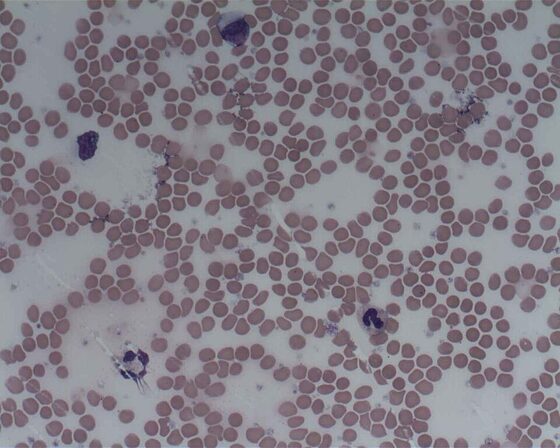
Howell-Jolly bodies (nuclear remnants) of hyposplenism (blood film)
Prof. Erhabor Osaro / CC BY-SA 4.0 — Wikimedia Commons
Investigations
Blood film (Howell-Jolly bodies, target cells, thrombocytosis); recognise the surgical/functional history; ensure the vaccination and prophylaxis record is up to date; investigate fever urgently as possible OPSI.
Management
Vaccinate (pneumococcal/Hib/meningococcal/flu) + prophylactic penicillin + treat any fever urgently (OPSI)
- 1Recognise hyposplenism (Howell-Jolly bodies/target cells/thrombocytosis + surgical or functional history). Prevent OPSI: vaccinate (pneumococcal, Hib, meningococcal ACWY+B, flu) and give prophylactic penicillin V, ideally ≥2 weeks before elective splenectomy.Gate: Fever in an asplenic patient is OPSI until proven otherwise → urgent broad-spectrum antibiotics and assessment; give patients standby antibiotics, an alert card and malaria advice.
- 2Lifelong (or long-term) penicillin prophylaxis, up-to-date vaccinations, patient education and prompt treatment of every febrile episode.
Key points
Howell-Jolly bodies + target cells + thrombocytosis + splenectomy/sickle/coeliac = hyposplenism → lifelong risk of OVERWHELMING infection with ENCAPSULATED bacteria (pneumococcus/Hib/meningococcus). Prevent: vaccinate (≥2 wk before elective splenectomy) + prophylactic penicillin + patient awareness/standby antibiotics. Fever = treat as OPSI emergency.
Monitor & prognosis
Vaccination/prophylaxis record, patient awareness, prompt response to fevers.
Excellent with prevention; OPSI carries very high mortality if treatment is delayed.
Source: BSH/UK guidelines on asplenia; cross-ref child_health (sickle), gastroenterology (coeliac)