Lymphoma (Hodgkin & non-Hodgkin)
Malignant clonal proliferation of lymphocytes in lymph nodes/lymphoid tissue
Overview
Malignancies of lymphocytes presenting as lymphadenopathy ± systemic 'B symptoms'. Hodgkin lymphoma (bimodal age, Reed-Sternberg cells, contiguous nodal spread, alcohol-induced node pain) is highly curable. Non-Hodgkin lymphoma is a heterogeneous group (indolent e.g. follicular vs aggressive e.g. diffuse large B-cell) that is commoner, more variable in behaviour, and more often extranodal/disseminated. Diagnosis is by lymph-node biopsy; staging guides treatment.
Recognise
- Painless rubbery lymphadenopathy ± hepatosplenomegaly; 'B symptoms' — fever, drenching night sweats, weight loss (>10%)
- HODGKIN: bimodal age (young adults + elderly), contiguous spread, REED-STERNBERG cells, pain in nodes after ALCOHOL; mediastinal mass
- NON-HODGKIN: commoner, older, often disseminated/extranodal; risk factors — immunosuppression/HIV, EBV, H. pylori (gastric MALT), autoimmune disease
Red flags
- Mediastinal mass with SVC obstruction, or airway/cord compression → oncological emergency
- Aggressive NHL with high tumour bulk → tumour lysis on treatment (prophylaxis)
Differentials & how to tell them apart
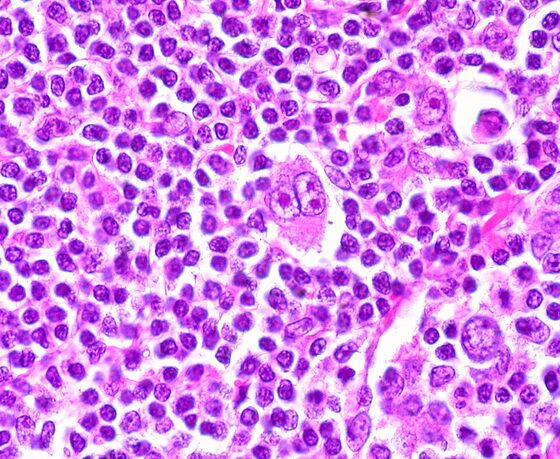
Reed-Sternberg cell in Hodgkin lymphoma (histology)
Ed Uthman, MD / CC BY-SA 2.0 — Wikimedia Commons
Investigations
LYMPH-NODE BIOPSY (excisional — the diagnostic test; Reed-Sternberg cells in Hodgkin); FBC/film, LDH (tumour bulk/prognosis); CT/PET for staging (Ann Arbor); HIV/hepatitis/EBV; marrow if indicated; assess for B symptoms.
Management
Excisional node biopsy + staging → chemo (± radiotherapy/rituximab) by type and stage
- 1Painless lymphadenopathy ± B symptoms → excisional LYMPH-NODE BIOPSY (Reed-Sternberg cells = Hodgkin) and stage with CT/PET (Ann Arbor) and LDH. Don't treat before tissue diagnosis.Gate: A mediastinal mass causing SVC obstruction or cord/airway compression is an oncological emergency; aggressive/bulky NHL needs tumour-lysis prophylaxis when treatment starts.
- 2Hodgkin → combination chemotherapy (ABVD) ± radiotherapy (highly curable); NHL → subtype-directed therapy (R-CHOP for DLBCL; watch-and-wait for indolent; H. pylori eradication for gastric MALT).
Key points
Painless rubbery lymphadenopathy + B symptoms (fever/night sweats/weight loss) → excisional node biopsy. Hodgkin = bimodal age, REED-STERNBERG cells, alcohol-induced node pain, contiguous spread (highly curable). NHL = commoner, disseminated/extranodal (HIV/EBV/H. pylori-MALT). Watch for SVC obstruction and tumour lysis.
Monitor & prognosis
Treatment response (PET), B symptoms/LDH, relapse; therapy toxicity.
Hodgkin highly curable; NHL varies from indolent to aggressive by subtype.
Source: NICE NG52 (lymphoma); cross-ref endocrine (paraneoplastic), gastroenterology (MALT)