Sickle cell disease
Autosomal recessive HbS (β-globin Glu→Val) → red-cell sickling, vaso-occlusion and haemolysis
Overview
An autosomal recessive haemoglobinopathy (HbSS) in which a β-globin point mutation produces haemoglobin S that polymerises when deoxygenated, sickling red cells and causing chronic haemolysis and vaso-occlusive crises. Affects people of African/Caribbean (and Mediterranean/Middle-Eastern/Indian) ancestry. Detected on newborn screening; management is prophylaxis (penicillin, vaccines, hydroxycarbamide) plus prompt crisis treatment. (Paediatric detail is on child_health.)
Recognise
- Painful vaso-occlusive crises (bones, chest, abdomen), often triggered by cold, dehydration, infection, hypoxia; chronic haemolytic anaemia, jaundice, gallstones; splenic sequestration/autosplenectomy → hyposplenism
- Acute CHEST SYNDROME (fever, chest pain, hypoxia, new infiltrate) — a leading cause of death; stroke; priapism; aplastic crisis (parvovirus B19)
- Blood film: sickle cells, target cells, Howell-Jolly bodies (hyposplenism); confirmed on haemoglobin electrophoresis
Red flags
- Acute chest syndrome (hypoxia + new infiltrate) → emergency (oxygen, analgesia, antibiotics, transfusion/exchange)
- Stroke, splenic sequestration (rapidly enlarging spleen + falling Hb), aplastic crisis, or sepsis (hyposplenic) → emergencies
Differentials & how to tell them apart
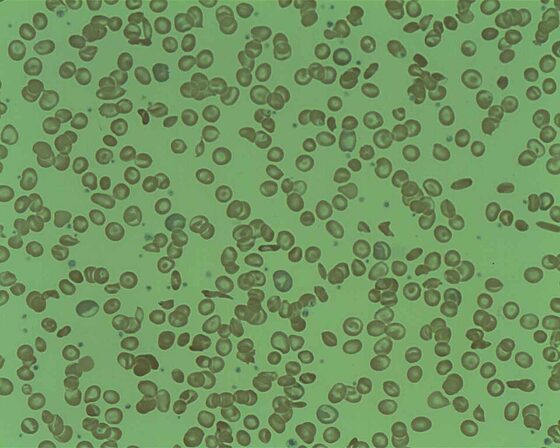
Sickle cell disease — sickled red cells on the blood film
Prof. Osaro Erhabor / CC BY-SA 3.0 — Wikimedia Commons
Investigations
Newborn screening; haemoglobin electrophoresis/HPLC (confirms HbSS); FBC + reticulocytes + blood film (sickle cells, Howell-Jolly bodies); during a crisis — assess for infection/hypoxia/chest syndrome (CXR, ABG); cross-match if transfusing.
Management
Crisis → analgesia + O2 + hydration + treat infection; prophylaxis (penicillin/vaccines) + hydroxycarbamide
- 1Confirm on electrophoresis (HbSS). Treat a vaso-occlusive crisis promptly with strong analgesia, oxygen, hydration and treatment of any infection.Gate: Acute chest syndrome (hypoxia + new infiltrate), stroke, splenic sequestration or aplastic crisis are emergencies needing urgent transfusion/exchange; functional hyposplenism mandates penicillin prophylaxis + vaccines.
- 2Long-term: hydroxycarbamide (raises HbF, fewer crises), folic acid, penicillin prophylaxis and vaccines, trigger avoidance; transfusion programmes/transplant in selected patients. Full paediatric detail on child_health.
Key points
HbSS + vaso-occlusive crises + chronic haemolysis in a patient of African/Caribbean ancestry = sickle cell disease → crisis: analgesia + O2 + hydration + treat infection. Emergencies: ACUTE CHEST SYNDROME (transfuse/exchange), stroke, splenic sequestration, aplastic crisis (parvovirus). Hyposplenic → penicillin + vaccines; hydroxycarbamide is disease-modifying.
Monitor & prognosis
Crisis frequency, Hb/reticulocytes, chest syndrome/stroke surveillance, hydroxycarbamide response, prophylaxis adherence.
Improved with comprehensive care; chest syndrome, stroke and sepsis are the leading causes of death.
Source: BSH sickle cell; cross-ref child_health (sickle/screening), pharmacology (hydroxycarbamide)